

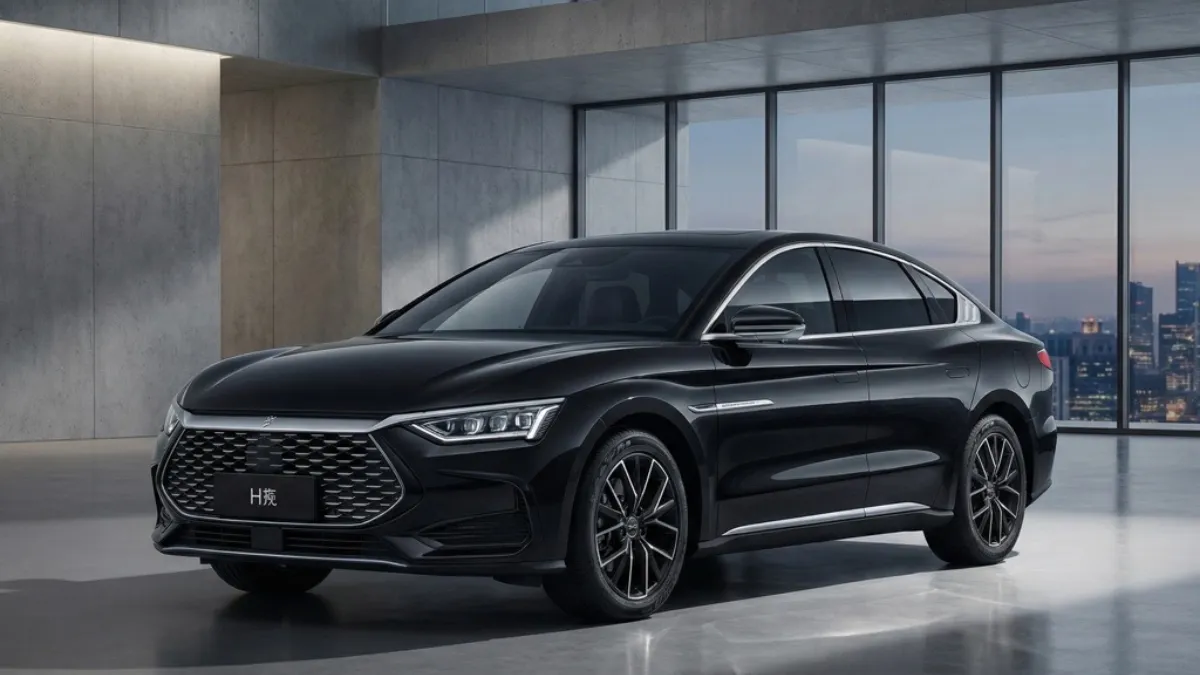
Chinese EV giant BYD quietly lifted the covers off something interesting. Not flashy. Not ultra-luxury. But strategic. The Linghui e9 the first model under its brand-new Linghui sub-brand arrived with a bold promise: 375 miles (605 km) of range in a practical electric sedan built mainly for fleets. That’s where the conversation around BYD low cost EV 375 miles range really begins. Long range. Sensible pricing. Big ambition. And honestly, it feels calculated.
Related News
Linghui Sub-Brand Strategy and Market Positioning
Linghui isn’t just another logo slapped on a car. It’s BYD’s fourth sub-brand, joining Denza, Yangwang, and FangChengBao. But unlike those premium experiments, this one feels grounded. Focused. The company describes it as a BYD new electric car line targeting high-value mobility. Sounds corporate. What it really means? Ride-hailing fleets. Taxis. Government contracts. Cars that work all day, every day.
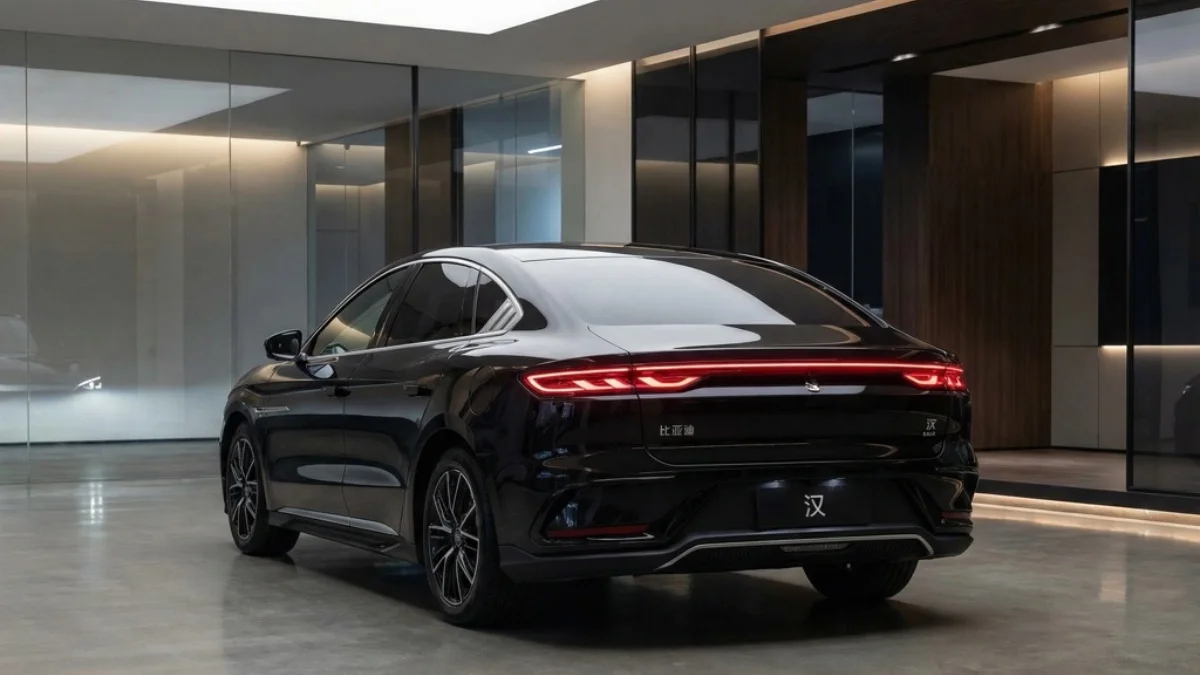
People are already calling it a BYD low cost EV, but that label feels slightly incomplete. Because while it’s positioned smartly on price, it’s not stripped down. BYD plans to integrate DiLink intelligent connectivity and DiSus body control tech. That’s not basic stuff.
The Linghui e9 measures 4,995 mm long with a 2,920 mm wheelbase. Proper mid-size sedan territory. Spacious enough for commercial duty, refined enough for private buyers. It clearly fits the affordable electric car narrative, yet doesn’t scream cheap. More like calculated efficiency. Some analysts even see it as BYD’s smartest BYD budget EV move yet. Quiet dominance instead of loud marketing.
Battery, Range, and Performance Details
Now comes the part fleet managers care about. Battery. Range. Running cost. The Linghui e9 offers two battery packs 60.5 kWh and 64.315 kWh. With the larger unit, BYD claims 605 km CLTC range. That places it firmly in the 375 mile electric vehicle discussion. On paper, it’s a serious BYD 375 miles range EV contender.
Power comes from a single front motor producing either 135 kW (181 hp) or 150 kW (201 hp). Not aggressive. Not slow either. Balanced. Sensible. And here’s where BYD quietly wins BYD electric car range credibility is already established globally. The company understands battery efficiency. They scale well. They iterate fast.
For fleet buyers, a BYD long range EV means fewer charging breaks. Lower downtime. Better margins. It’s simple math. The formula feels clear. Build a practical electric sedan segment product. Offer real-world battery efficiency. Keep ownership predictable. Done.
Expected Pricing, Launch Plans, and Global Expansion
Official pricing isn’t out yet. But expectations are building ahead of the next BYD EV launch update. If we look at history, BYD’s e7 sedan started at 103,800 yuan (around $14,500). That sets a tone. If Linghui e9 follows similar logic, it could reshape the affordable long range EV space. And not slowly. Quickly.
Also read : BYD Shocks the World in 2025 Overtakes Tesla and Ford to Claim the Global EV Crown
Globally, BYD is expanding with confidence. Europe. Asia. Emerging markets. Each region wants dependable EVs that don’t break budgets. Linghui fits right in that gap between high-end luxury and bare-minimum commuter cars.
What makes this story interesting isn’t just specs. It’s timing. EV adoption is rising, but cost anxiety still exists. Charging infrastructure is improving, but not perfect. So a sedan offering long driving range with fleet practicality? That makes sense. The Linghui e9 may not be dramatic. It’s deliberate. And sometimes, deliberate wins.