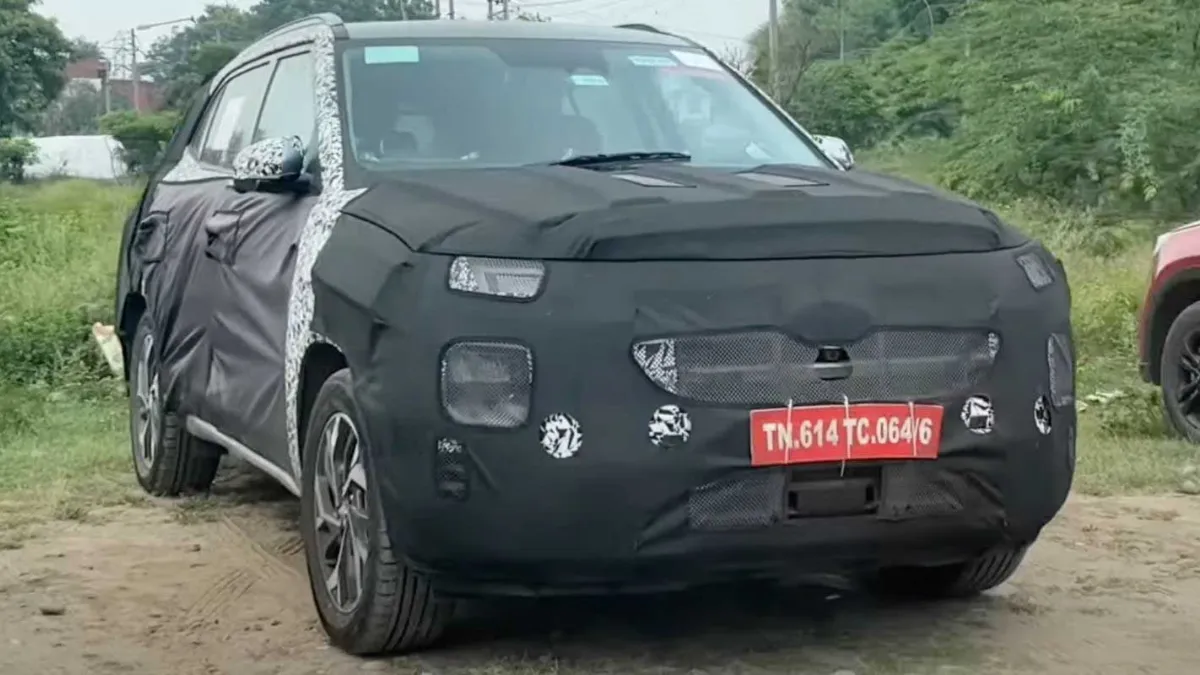
Hyundai has started real-world testing of the third-generation Creta, and the first spy shots out of South Korea don’t look casual at all. Heavy camouflage. Early-stage test mule. No attempt to tease details. That usually means one thing. This is not a quick refresh. This is Hyundai rewriting the Creta from scratch.
Related News


I’ve seen this pattern before. When a brand hides a car this hard, it’s because the basics are changing. Proportions. Platform. Positioning. And Creta, honestly, needs that now.
Design shift softer gone, sharper coming
Even under layers of camouflage, the next-gen Creta looks different. Boxier. More upright. Less rounded drama, more straight-line confidence. The current Creta has that soft, urban look. This one feels more SUV-ish.
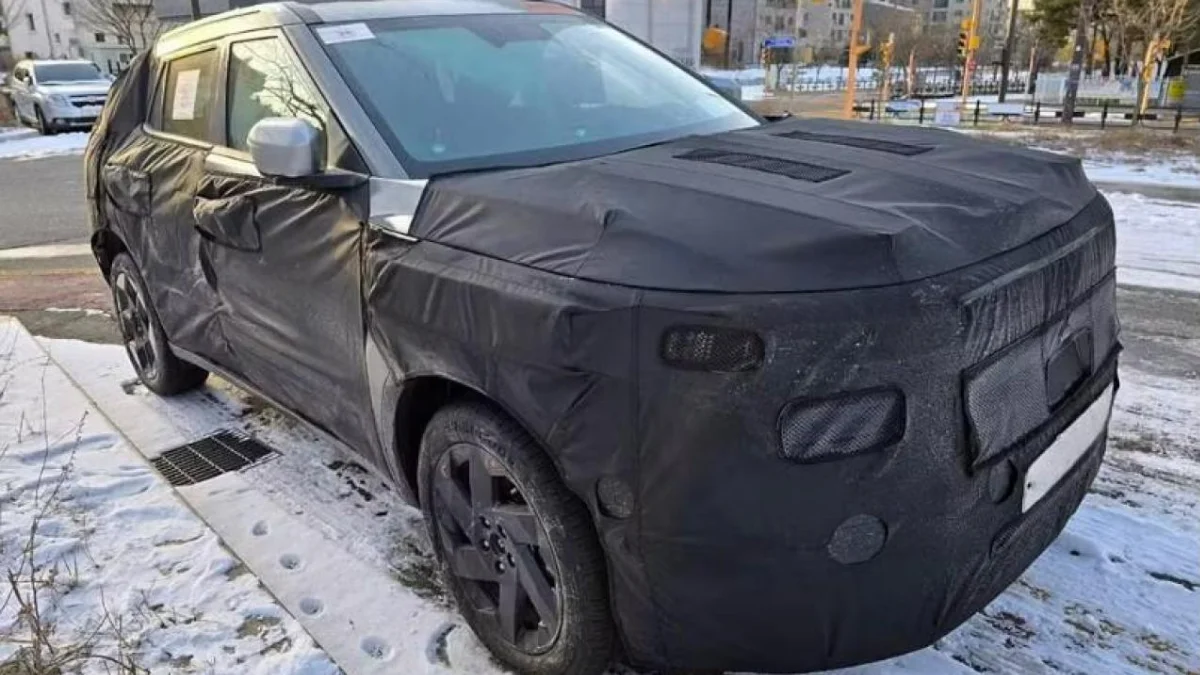
The nose is upright, the windscreen steep, overhangs look short. All signs point towards better space usage and stronger road presence. The side profile, especially the squared glass area, instantly reminds you of the new Kia Seltos. Not copying. Just family resemblance. At the back, there’s a hint of a sloping roof and a chunky spoiler. Sporty touch, yes. But still solid. Not trying too hard.
New platform underneath That matters more than you think
Internally known as SX3, the third-gen Creta is expected to move to the newer K3 platform. Same base as the latest Seltos. On paper, that means better rigidity and improved crash structure.
Off paper, it usually means the car feels tighter. Doors shut better. High-speed stability improves. Small things, but you notice them after living with a car. And yes, size could go up slightly. Length. Wheelbase. Enough to make Creta one of the largest in its segment. Hyundai plays this game well.
Engines stay familiar Hybrid could change the conversation
For India, expect the known faces. 1.5 petrol. 1.5 diesel. Turbo-petrol. Manuals and automatics. Hyundai won’t mess with what already sells.
The interesting chatter is around a strong hybrid. And this time, it feels serious. Kia has already confirmed a hybrid Seltos timeline. Hyundai won’t sit out. If tuned well, a Creta hybrid could finally make efficiency a real talking point, not just a brochure claim. But if it’s rushed. Or overpriced. Indian buyers won’t be polite about it.
Inside story bigger screens are easy, better software isn’t
The cabin is expected to jump a generation. Larger digital screens, newer connected tech, more ADAS features. Sounds good. Looks good in photos too.
But here’s the thing. Bigger screens expose weak software faster. I’ve seen early Hyundai systems lag, freeze, then magically fix themselves after updates. Not everyone has patience for that. ADAS also needs Indian-road sense. Otherwise it’s just a demo feature sales guys show once.
Pressure is real this time
The mid-size SUV segment isn’t forgiving anymore. Tata Sierra is coming. New Renault Duster too. Then there’s Seltos, Grand Vitara, Hyryder, Taigun, Kushaq. Everyone wants a bite. Creta ruled this space for nearly a decade. But dominance doesn’t renew automatically. Each new generation has to earn it again.
Also read : Hyundai Exter Facelift Spied: Real Space Upgrade or Just Clever Packaging?
Final thought a crucial moment for Hyundai
This third-generation Creta is more than a new model. It’s a test. Bolder design. New platform. Hybrid promise. All the right moves on paper.
But buyers are sharper now. They ask questions. About safety. Software. Long-term ownership. Creta still has brand trust. That helps. Once the camouflage comes off, the real judgement starts. Till then, excitement is fair. Blind belief isn’t.