

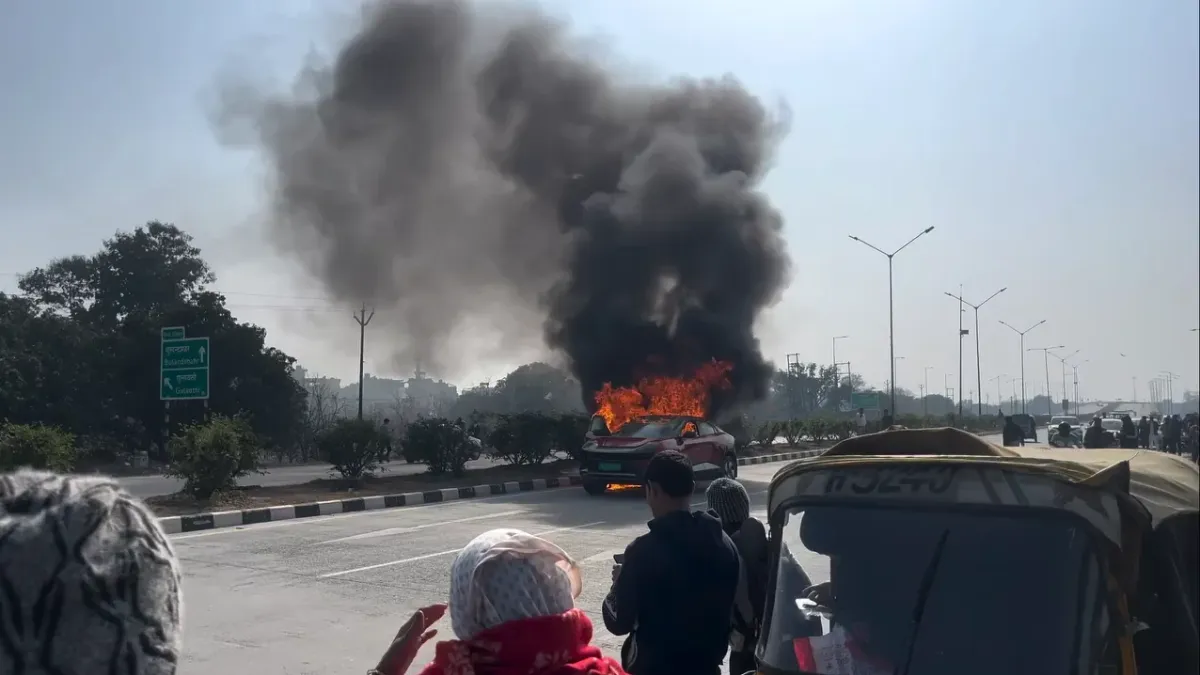
When I first saw the video of the Mahindra BE 6 on fire, one thing was clear this didn’t look like a typical EV battery fire. A red BE 6 standing on what looks like a highway, completely engulfed in flames. The only real relief? Everyone inside reportedly got out safely.
Related News

The incident took place near Gulaothi in Uttar Pradesh. As the video spread on social media, comparisons came quickly Is this another Tata Nexon EV–type incident? Battery failure? Thermal runaway? EV safety under question again. Mahindra, however, chose to explain the incident in detail. And this is where the story takes an unexpected turn.
What Mahindra claims actually happened
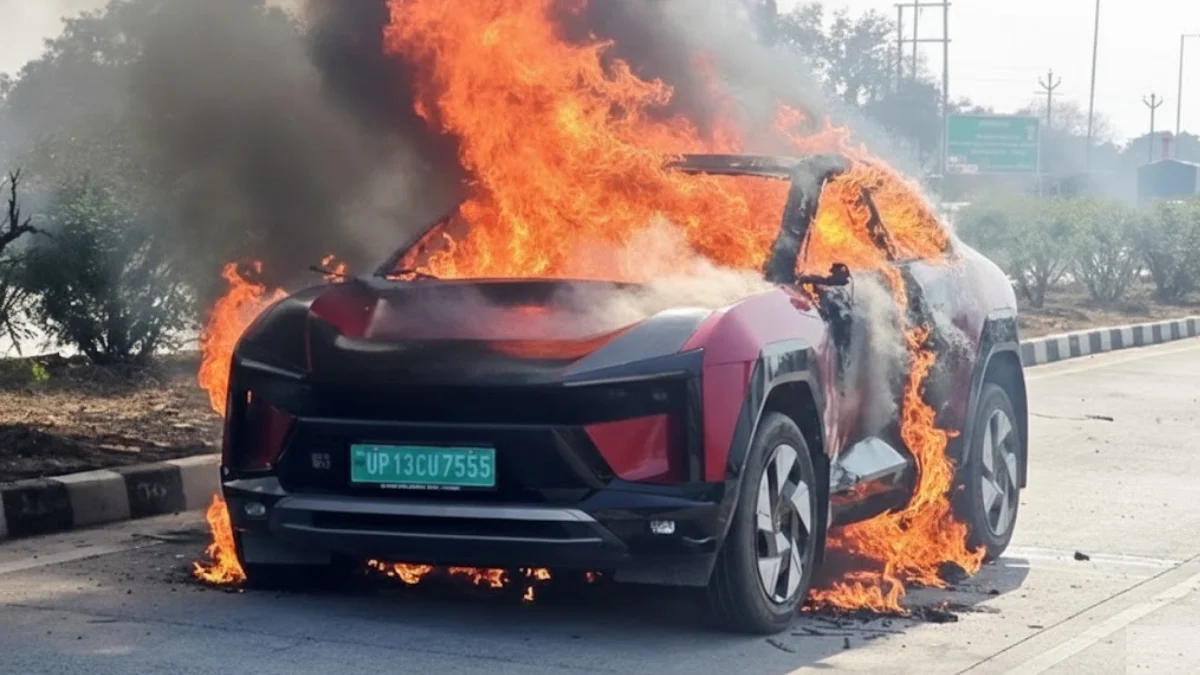
According to the automaker, the battery pack and electric motor were completely intact and safe. No thermal event. No internal battery failure. The real wrongdoer, Mahindra says, become a deflated rear-right tyre.
Their investigation found out that the BE 6 turned into pushed for nearly 10 minutes at speeds of as much as 60 km/h, in spite of the tyre being deflated. During this time, the vehicle reportedly issued more than one warnings, which include tyre stress signals and excessive tyre temperature notifications. Yet, the automobile continued transferring.
Where matters commenced going incorrect
Driving with a deflated tyre reasons intense warmth buildup In this case, that heat kept rising. Mahindra states that:
- Stability control and traction control systems were repeatedly activated to limit wheel spin
- The electronics tried to compensate for the compromised tyre
- As a safety measure, vehicle speed was electronically limited
- Eventually, the entire drive system was shut down, bringing the BE 6 to a complete stop
By then, the damage had already been done. After reviewing video footage from the scene, Mahindra claims the fire originated from the rear-right tyre, not the battery or motor compartment.
EV fire or prolonged misuse?
This distinction matters. Because every EV fire is quickly labelled a battery explosion. But this case, if Mahindra’s findings are accurate, points to mechanical failure combined with prolonged driving under unsafe conditions.
A deflated tyre, high speeds, and continued driving for 10 minutes is a recipe for excessive heat. And when rubber burns, it can easily look like an EV battery fire on camera.
The uncomfortable question
There’s one question that can’t be ignored If the car was throwing repeated warnings, why wasn’t it stopped sooner?
EV or ICE, driving with a deflated tyre is never safe. In an EV, the risk multiplies because electronic systems keep working overtime to compensate.
The positives
- All occupants were safe
- The battery and motor remained unaffected
- Safety systems worked as designed till the very end
The negatives
- Warning alerts were ignored
- A basic tyre issue escalated into a full-blown fire
- This wasn’t EV technology failing. If anything, it looks more like human judgement failing first.
Also read : Mahindra BE 6 EV Review Is This Indias Most Practical Electric Car or Just Hype?
Bottom line
Calling this incident proof that Mahindra EVs are unsafe would be unfair. At the same time, pretending driver responsibility doesn’t matter would be equally wrong.