

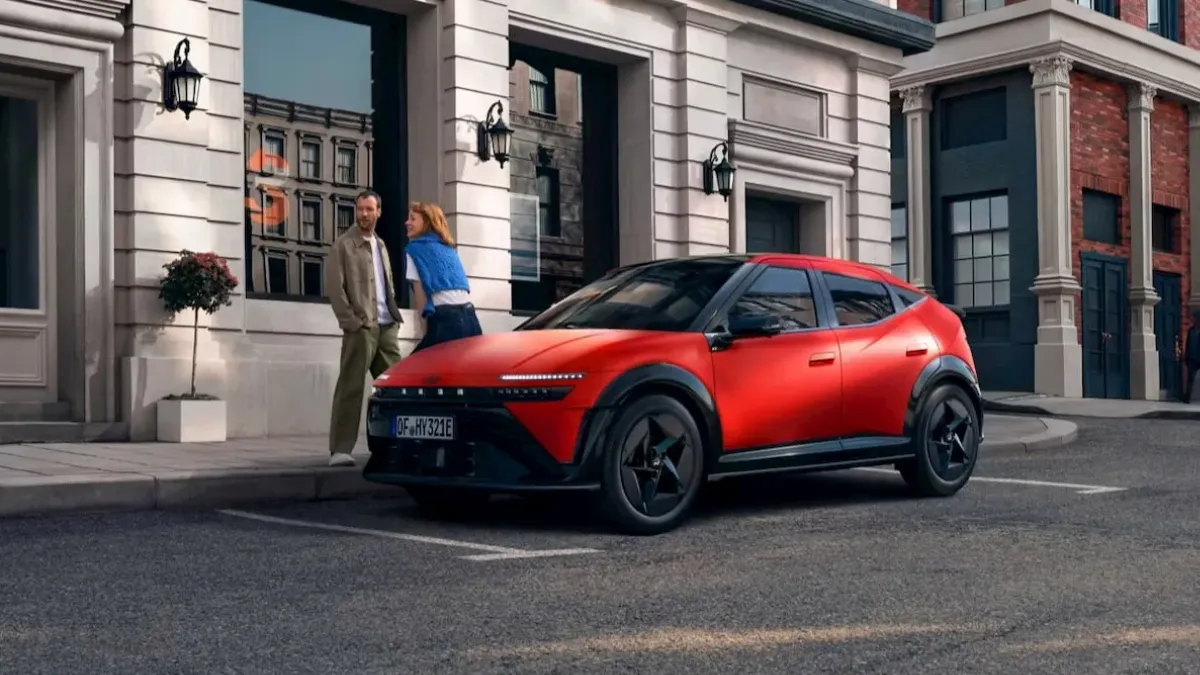
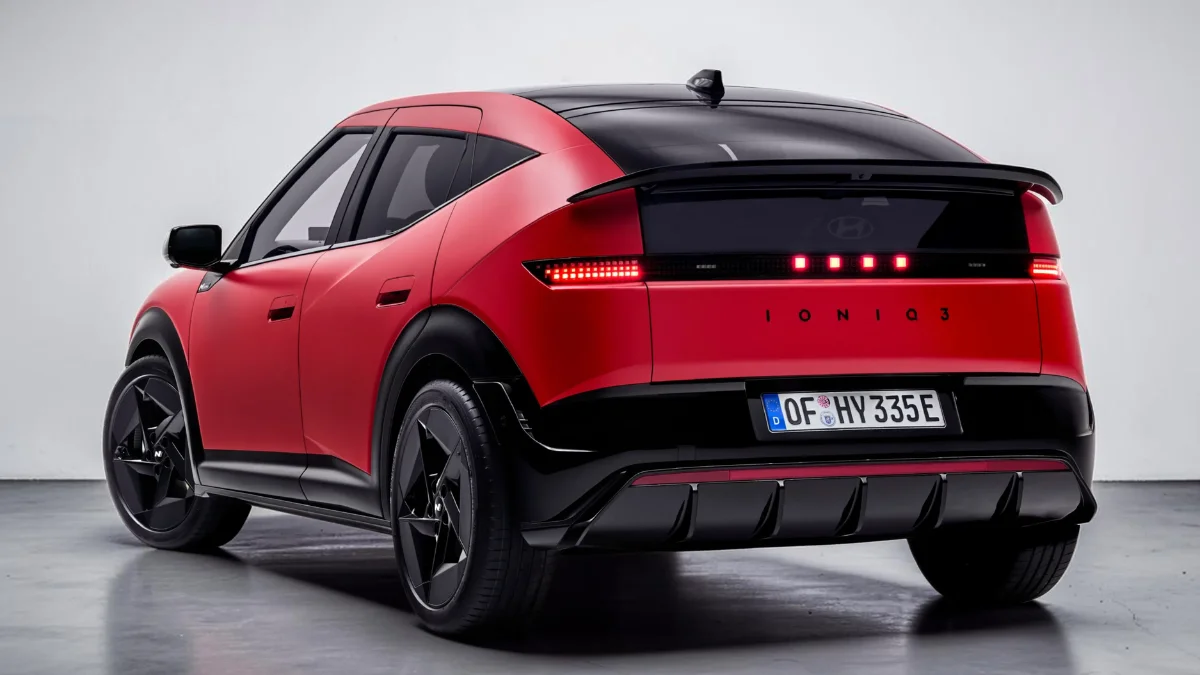
Hyundai’s Ioniq 3 just broke cover in Europe and honestly, it’s the kind of EV that makes you pause for a second. Nearly 496km range from a compact hatchback. Sounds almost unreal, right? And yet, that’s exactly what’s being claimed. But here’s the thing. What looks perfect on paper often behaves very differently on Indian roads Always does.
Hyundai Ioniq 3 A New Benchmark in Efficiency
Hyundai has clearly gone all-in on efficiency with the Ioniq 3 A 61kWh battery Drag coefficient of just 0.263. Numbers that sound more like a science project than a regular hatchback. But that’s the point.
Related News

It’s not trying to be fast. Not trying to be flashy. Just squeeze every last kilometer out of every charge. And it works at least in Europe. Smooth roads, predictable charging, controlled driving cycles. Everything fits together there. But imagine this car in India traffic. Stop-go chaos. Heat. Random detours. Suddenly that near 500km starts behaving a little differently.
Why Compact EVs Struggle in the Indian Market
Now here’s where things get interesting. In India, a 500km range compact EV sounds like a dream. Something buyers would instantly want. But reality? It’s messy. SUV obsession is real here. Hatchbacks, even electric ones, struggle to get attention in higher price brackets. And this is exactly why many feel small EV India not coming is not just a rumour, but kind of visible in market behaviour.
Even launches are slow. Delayed sometimes. Feels like a compact electric car India delay is always hanging in the background. Not officially said, but you can see it. And honestly, people here don’t just buy specs. They buy presence. Road feel. Size matters more than efficiency sometimes. Strange but true.
Infrastructure Gap Still Defines EV Adoption
Range sounds exciting. Until you plug in. India’s charging network is improving, yes, but not evenly. Metro cities are fine-ish. Highways? Still patchy. Small towns? Forget it for now. This is why EV infrastructure India issues keep coming up again and again. Not because EVs don’t work. But because the ecosystem is still catching up.
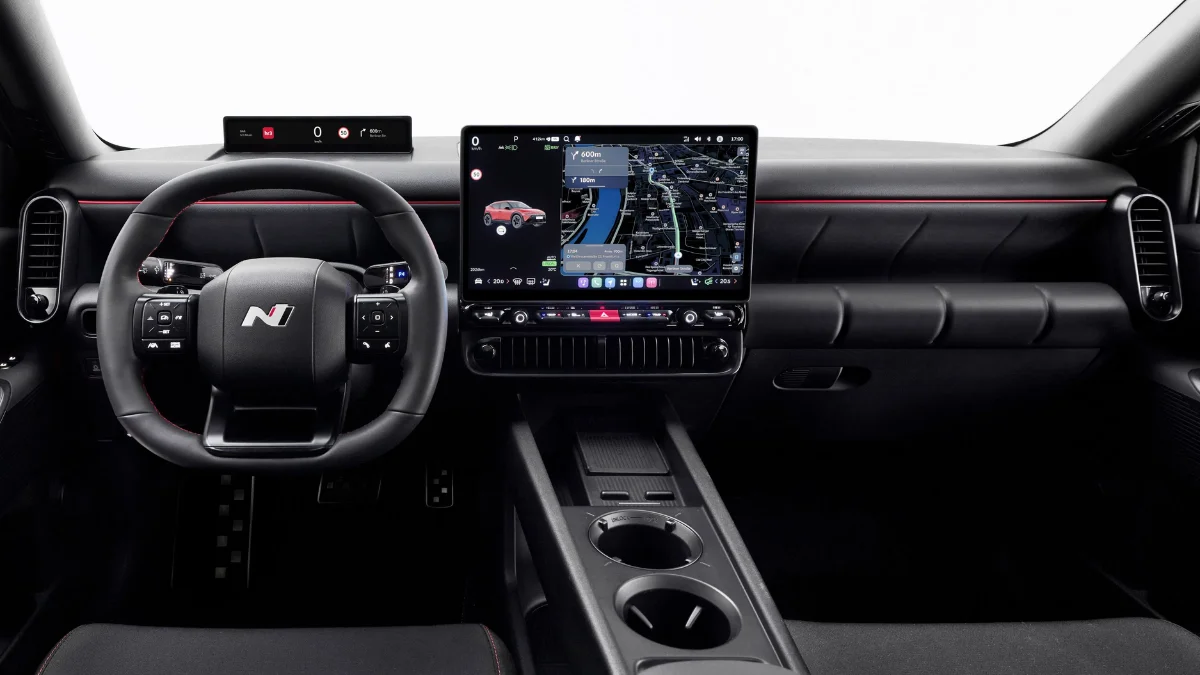
So even if you had a proper EV range 500km India product, the usage story still feels incomplete. Home charging becomes default. Fast charging becomes occasional luxury. Not the other way around.
Cost Pressure and Market Limitations
Let’s talk money. Because that changes everything. A car like Ioniq 3, if it ever comes here, won’t be cheap. Not even close. Battery tech, safety systems, premium interior bits all push cost up. Easily beyond ₹25 lakh territory. And at that point, buyers here start looking at SUVs. Not hatchbacks That’s just how it is.
So the idea of affordable long range EV India still feels distant. Not impossible, but not ready yet either. Meanwhile, globally, brands are pushing forward with upcoming compact EV global models at crazy speed. Innovation is fast. Sometimes too fast for India to catch up in real time.
Also read : These 3 Upcoming Sub-Compact EVs Could Change Indias Budget Electric Car Game
Global Innovation vs Indian Reality
What Hyundai is showing with Ioniq 3 is simple. The tech gap is real. Efficiency has reached a new level. No doubt But India has its own story running parallel. Different roads. Different buyers Different priorities.
That’s why India EV market limitations are not just about technology. It’s about how people actually use cars here. And that changes everything. So yes, the future looks exciting. But also slightly out of sync. Like two timelines running together, but not quite meeting yet. And maybe that’s okay. For now.
